Skin After 45
Skin After 45: What Changed, and What Actually Helps
Something shifts and nobody warns you. You did not do anything wrong.
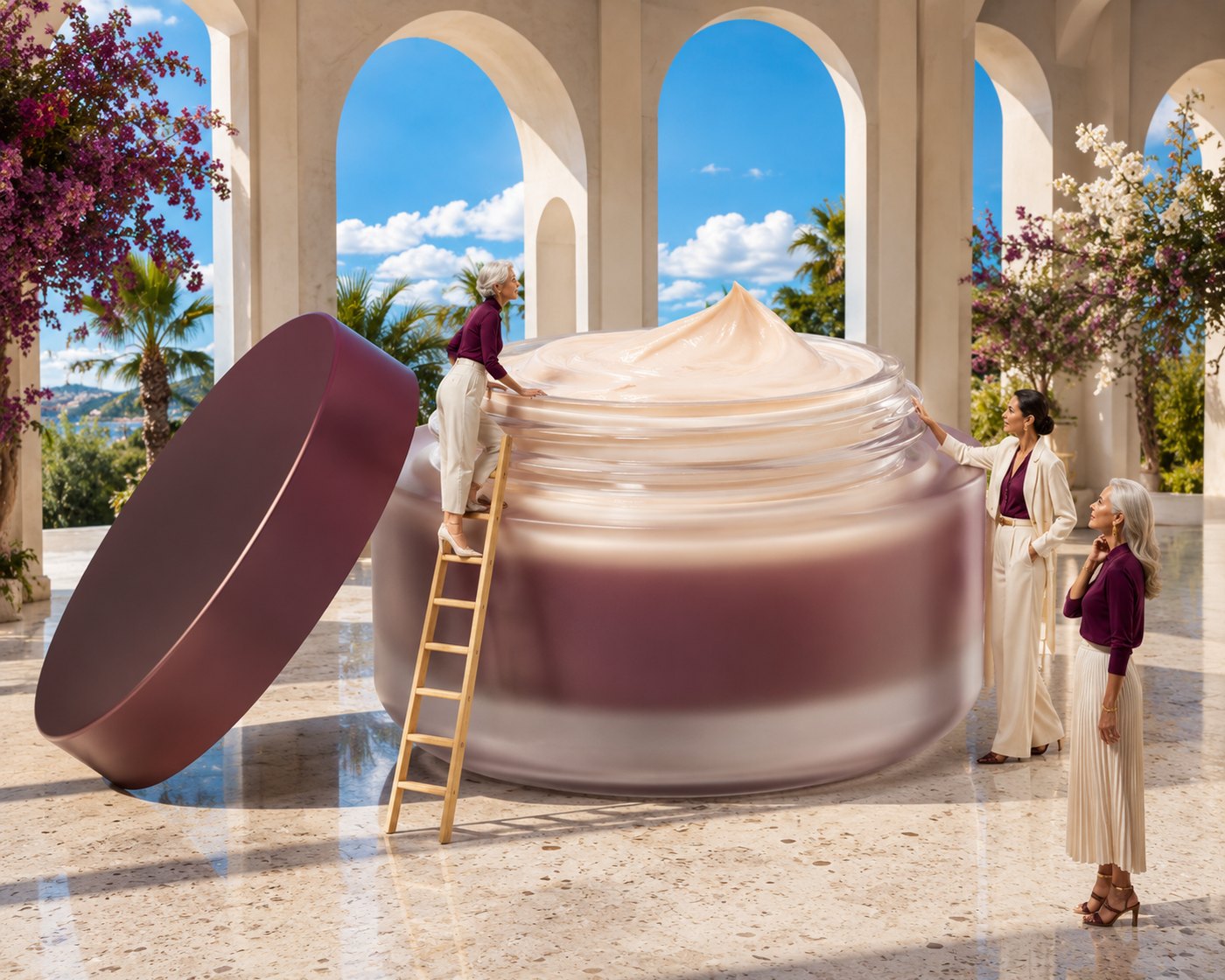
Something shifts and nobody warns you. The products that worked for fifteen years stop working. The foundation sits differently. Skin that was oily is suddenly tight by two in the afternoon.
You did not do anything wrong. The underlying conditions changed.
What is actually happening
Oestrogen supports collagen production, skin thickness, and the skin's ability to hold water. As it declines, all three decline with it. Sebum production drops, which sounds like good news if you spent your twenties blotting, but oil was also part of your barrier. Cell turnover slows, so dullness arrives and stays.
Pigmentation often gets worse at exactly this moment, which feels deeply unfair, and is usually a combination of hormonal shift and decades of accumulated sun.
What actually helps
- Stop stripping. Whatever cleanser leaves your face squeaking has to go. That squeak is your barrier.
- Add back the lipids. Ceramides, squalane, cholesterol. Your skin used to make these. Now you supply them.
- Retinoid, slowly. Twice a week, buffered over moisturizer, and build. This is the one active with decades of evidence behind it.
- Iron oxides in your sunscreen. If pigmentation is part of your picture, this matters more than anything else on this list.
What does not help
More products. A twelve-step routine on compromised skin is twelve chances to irritate it. Four things used consistently will beat twelve used sporadically every time.
And the language around all of this deserves better. Nothing is being corrected or fixed. It is a different set of conditions, and it responds to a different approach. That is all.